
Six Warning Signs Your Construction Margin May Be Under Pressure
A market report produced by Lentune, in conjunction with Margin Insight 'Construction Diagnostics & Analytics' and Carmel Turner • 5 August, 2026
Prefer the PDF? Download a copy
.jpg?width=1400&height=1000&name=Untitled%20design%20(73).jpg)
Most of it doesn't go in one big hit
Ask a builder where margin was lost on a bad job and there is rarely one simple answer.
Sometimes the problem was already in the estimate. Sometimes the contract changed the risk. A PO was raised after the invoice arrived. Changed work went ahead and nobody closed the commercial loop. Or work was priced, ordered or built from information that was no longer current.
None of these things automatically means margin has been lost. They are warning signs, reasons to look more closely and understand whether margin may be at risk.
Lentune has been working with Margin Insight to look at where these warning signs appear and the commercial questions they should prompt. Alongside that, Lentune reviewed what construction businesses had told us before joining the platform. Similar themes kept appearing: late visibility, weak commitment control, variations and claims, disconnected information and difficulty knowing where a job really stands.
6 warning signs your margin could be at risk
POs are being raised after the invoice is received
The cost being committed doesn't line up with what was allowed
Changed work proceeds before the commercial position is clear
The contract you've signed isn't the job you priced
Costs are increasing but the recovery isn't clear
Work is being priced, ordered or built from superseded information
Some problems are already in the job before site starts
Take this recent real-world project as a good example.
The estimate carried around $50,000 for ceilings and partitions. During procurement it became clear that plasterboard lining to the internal walls had largely been missed, along with the external cladding. The package was ultimately let for about $400,000.
That's a $350,000 difference before the subcontractor starts work.
The useful question isn't simply, "How did the estimator miss it?"
The delivery team needs to understand what sat behind the original allowance and compare that with what is now being bought. You don't need to be a ceilings expert to do that. You need to know enough about the package to establish whether you're comparing the same scope.
You don't need to know every trade inside out. But you do need to know what you allowed for, what you're buying now and whether you're comparing the same thing.
The trade changes but the commercial discipline doesn't.
Warning sign
1. The PO gets raised after the invoice
A Purchase Order should capture a commitment before that commitment becomes an actual cost. If Accounts receives the invoice first and somebody then raises a PO so it can be processed, the money has already been spent.
The question has changed from: "Should we commit this cost?" to: "Where do we put this invoice?"
But an early PO is only useful if somebody has done the commercial thinking first.
Is there budget available? Does the scope match what was allowed? Is part of the work already covered elsewhere? If the commitment is above budget, why?
A late PO doesn't prove margin has been lost.
It does suggest the commitment may not have been visible or properly reviewed before the cost arrived.
Lentune has seen the demand for this control directly.
A purchase order should be the result of a commercial decision, not the start of one.
Warning sign
2. The cost doesn't line up with what was allowed
If a package has a $300,000 budget and you're about to commit $340,000, that deserves a look before anyone signs the order.
Maybe the estimate was light. Quantities may have changed. The subcontract might contain additional scope. Some of the cost might already be allowed elsewhere.
Coding can muddy the picture as well.
If crane hire was included in the structural steel allowance but the invoices are later charged to preliminaries, the total cost may still be right but steel now looks better and preliminaries look worse.
You're no longer comparing apples with apples.
A budget isn't just a dollar amount. There is scope and a set of assumptions sitting behind it.
If the cost report doesn't speak the same language as the estimate, you can have accurate numbers and still struggle to see where the job is actually moving.
Warning sign
3. Changed work goes ahead before the commercial position is clear
Construction doesn't always wait for the paperwork.
Something changes. Site needs an answer. A subbie is standing there. Programme is tight.
Someone says:
"Just get on with it and we'll sort it out."
Sometimes that has to happen. The risk is never sorting it out.
What changed? Who instructed it? What will it cost? Is notice required? Is there a subcontract variation? Can the builder recover it? Has the forecast been updated?
The work may have to proceed before formal approval arrives. The commercial position still needs to be managed.
Lentune's customer discussions reflect this:
Changed work happens. The risk is letting the work move ahead and never closing the loop on who is paying for it. If that loop isn't closed, the cost has a habit of staying exactly where it landed — with the builder.
WARNING SIGN
4. The contract you've signed isn't the job you priced
One $9.3 million project was priced as construct-only.
Before signing, the builder was asked to accept a Design & Construct contract instead. The reassurance was that it was "D&C in name only." It wasn't.
The architectural design had changed from screw piles to slab-on-ground construction, but the civil and hydraulic drawings had not been properly coordinated with the revised design. Months later the consequences surfaced in slab levels and underslab drainage. Because the builder had signed D&C, the design coordination problem now sat with them.
Additional concrete, civil work, rework, downtime, delay and management time followed.
The bigger issue wasn't simply that the drawings were wrong.
The builder had signed a different risk position from the one it had priced.
Before signing, make sure the contract in front of you still reflects the job you tendered.
Before you sign, make sure the deal in front of you is still the deal you priced.

WARNING SIGN
5. Costs are increasing, but the recovery isn't clear
A cost increase doesn't automatically mean margin has been lost, as the builder may be entitled to recover some or all of it. For example, a trade package may be forecast to finish $150,000 over budget, but there could be a client variation behind the increase, a recoverable design change or subcontract variations that are still being assessed. Alternatively, the additional cost may genuinely sit with the builder.
The warning sign is that the cost has moved but the corresponding recovery isn't clear. That should prompt the project team to investigate what caused the increase, whether any of it is recoverable, whether the required notices have been issued, and whether variations have been submitted, approved and claimed. The forecast revenue should also reflect the current commercial position.
The system doesn't need to determine contractual entitlement. It can still identify that cost and revenue are no longer moving together and point the project team towards an area that deserves further investigation.
Sometimes the most useful thing the system can do is show you where you need to ask the question.
WARNING SIGN
6. Work is being priced, ordered or built from old information
Drawings don't look like a financial control. Until someone builds from the wrong revision.
A revised drawing doesn't reach the subcontractor pricing the work. Materials are ordered from an old detail. Site builds from the drawing in its folder and later discovers a new revision changed the work.
Then come the rework, wasted material, additional labour, subcontract variations, delay and disrupted sequencing — followed by the inevitable discussion about who is paying for it.
The problem may have started with document control. It ends up in the cost report.
Not every threat to margin starts with a dollar sign. Sometimes it starts with a revision number. Drawings can look like a delivery issue. Once something is ordered or built from the wrong information, they become a commercial issue very quickly.
A system is not control
Software can make budgets and commitments visible. It can support approval limits, connect POs and invoices, hold claims and forecasts and put the same information in front of the people running the job.
But the system is only part of the answer; the process determines how people use it.
With Purchase Orders, for example, the software can provide the workflow, but somebody still needs to check the budget, understand the scope, investigate any difference and decide whether the cost should be committed.
The PO then records that decision. If people repeatedly work around the process, adding another button probably isn't the answer. The issue may be better addressed through training, clearer responsibility or simply making sure the agreed standard is understood and followed.
The system gives people the information. The process sets out what should happen. People still have to use their judgement and follow it.
Good software supports good commercial management.
It doesn't replace it.
Better control gives you more than margin
Protecting margin is the obvious benefit, but better commercial control also gives the people running the business greater confidence in where their jobs are heading. Directors shouldn't need to sit inside every claim to understand the commercial position, Project Managers need forecasts they can rely on, and commercial staff should be spending their time investigating the issues that matter rather than reconstructing information that should already be available.
Lentune heard the human side of this directly.
Better information doesn't remove construction risk.
It gives the business a better chance of seeing it while there is still something it can do about it.
If you change one thing
Start with the Purchase Order process.
But don't start with:
"Everyone must raise a PO."
Start before that.
- Understand what you're buying.
- Check the budget and the scope behind it.
- Compare the proposed order with what was allowed.
- If they don't line up, find out why.
Then ask:
Should we commit this cost?
If the answer is yes, approve it and raise the PO before the invoice arrives.
Now the system is capturing the commitment before it becomes an actual cost.
That changes the conversation from:
"Where do we code this invoice?"
to:
"Should we spend this money and what does it mean for the job?"
That's the difference between recording expenditure and controlling cost.
The first 1%
Don't try to fix the whole commercial function tomorrow.
Choose one commercial control and make sure everyone understands why it matters, who is responsible for it and how the system supports the process. Once that control is working consistently, move on to the next one. Small margin leaks add up over the life of a project, but so do small improvements in commercial discipline.
About Margin Insight
Margin Insight is a construction diagnostics and analytics practice led by Carmel Turner.
Carmel has more than 30 years' experience across construction financial accounting, contract administration, commercial management, project delivery and technology.
Margin Insight focuses on turning construction data and project information into useful commercial insight. It does this by identifying where something deserves a closer look and applying practical commercial reasoning to what should be checked next.
Understand what was allowed. Understand what is happening now. Make sure you're comparing like with like. Then investigate the difference.
Share this
BOOK A DEMO
Get hawk eyes across every dollar and cent, live
Book a free personalised demo to discover how Lentune automates your project cost management and empowers you with real-time insights.
See how it works in action:
 Save up to 70% of your admin time
Say bye-bye to data entry
Get project reporting at light speed
One-click invoice approvals
Connect with Xero, Procore, and more
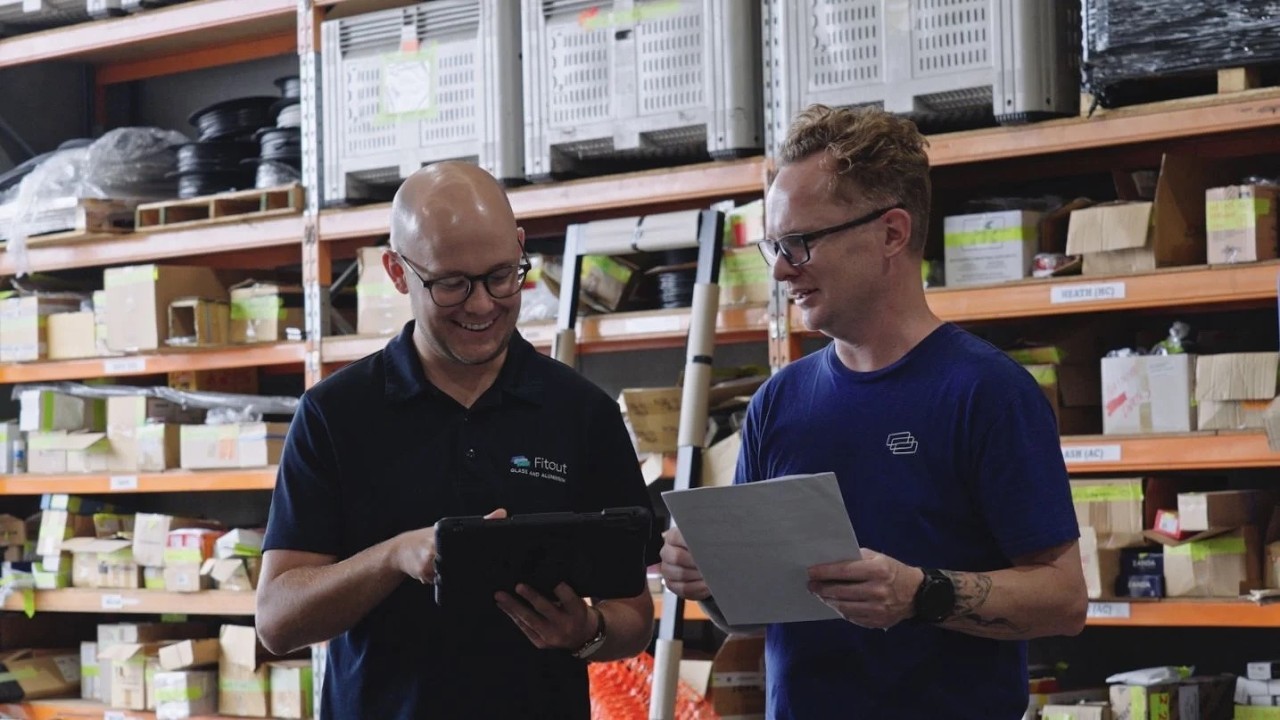
Fitout Glass increased net profit by 20% with better cost visibility
Frequently asked questions
Margin leakage happens when costs are committed but not visible until invoices arrive weeks later. By then, the damage is done. Common causes include purchase orders raised after the fact, variations coded incorrectly, work starting before approval, and cost reports that tell you where you are but not why a number moved.
The six most common places are: purchase orders raised after the invoice arrives, variations coded to the wrong job or cost code, work starting before variation approval, running blind between monthly reports, cost reports that show what happened but not why, and relying on one spreadsheet with one person and no backup. Most of these are process issues, not software problems.
Australian construction consultant Carmel Turner estimates it takes around 13 hours a month to rebuild a cost report by hand - adding context, tracking down reasons for variances, and preparing it for a decision. On a $9M job with a 6% margin, that's roughly 3.5% of profit spent explaining numbers the system already holds. Across three or four jobs, that can reach $60,000 a year.
Not on its own. A system can hold a process consistently - requiring a PO before commitment, keeping costs visible as they're incurred, and blocking orders against over-budget codes. But it can't make decisions for you. You still need someone looking at the numbers and making the call. What software does is make sure the information arrives early enough for the decision to still matter.
Carmel Turner has over 30 years of experience working with and inside construction businesses, across accounting, commercial management, project delivery and technology. She understands the industry from the ground up, not from theory. Carmel now helps businesses turn that experience into clearer thinking and practical improvement. In short, her work is to protect margin.